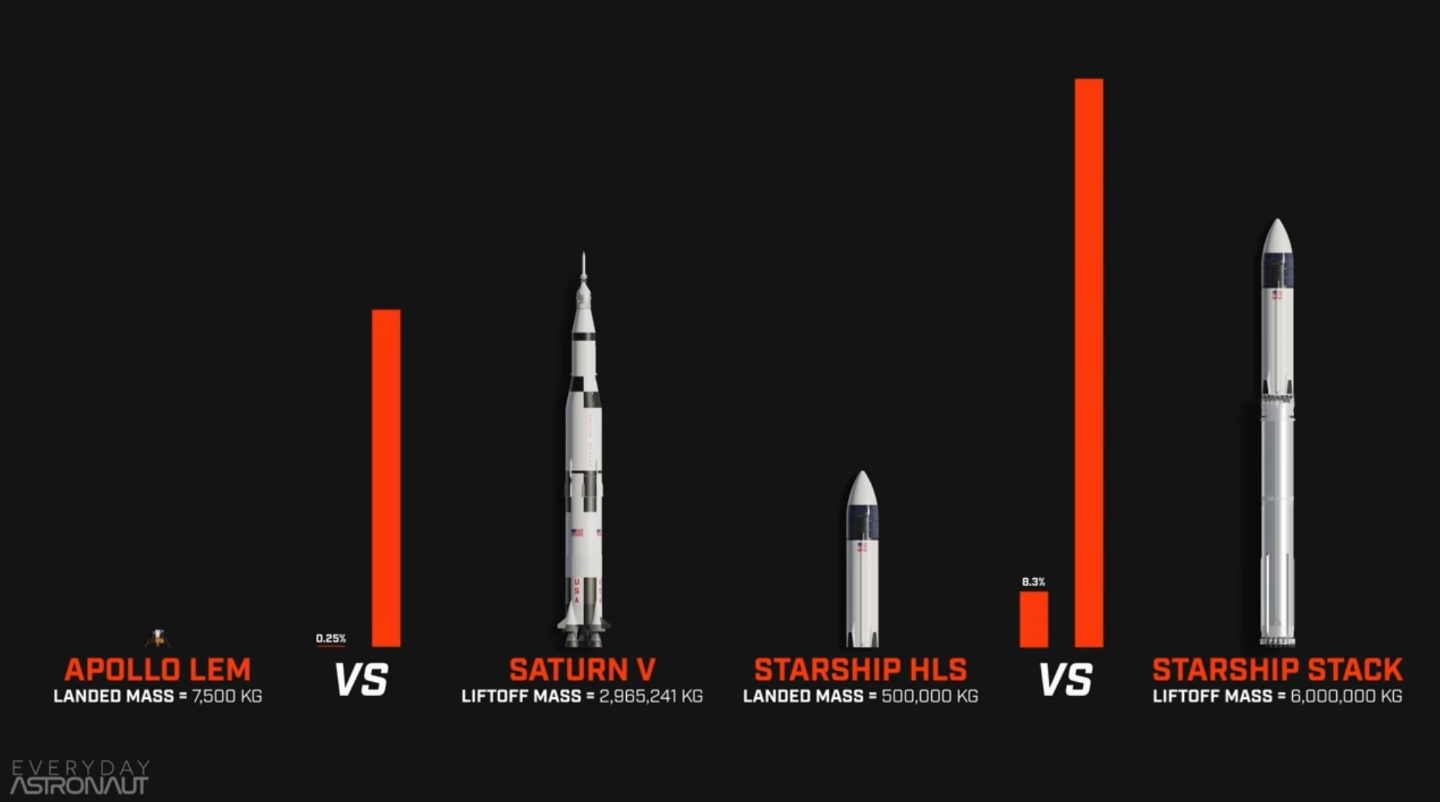
After watching Tim’s video, I finally understand why SpaceX is still committed to this HLS lunar lander architecture, even if it requires more than fourteen orbital refueling flights. If the goal is anything more ambitious than simply replaying Apollo, the long-term math still points in this direction.
For building a sustained lunar base, a single mission that can deliver roughly ten tons of useful payload is probably the bare minimum. A dozen-plus orbital refueling flights may be workable on paper, but once the number gets that high, boil-off in orbit, ground-side launch cadence, and the logistics around propellant supply all become the real constraints.
In the end, SpaceX may either have to wait for a later-generation Starship, perhaps around 2030, or abandon reuse for the first operational orbital-refueling campaign. That could mean expending roughly eight upper-stage Starships, or in a more extreme version, expending five full booster-and-ship stacks.
My guess is that this round of the space race ends with China landing first. The United States may arrive two years later, but with payload capacity an order of magnitude higher.
Source video: https://www.youtube.com/watch?v=T-jf6tTKt3Y